
Food, Water and Air. This was the first strategy that I adopted. It was neither University Level, nor Google Scholar level research-based driven, as so much of my lifestyle choices have been during my first year. While not a heavy drinker, I stopped drinking alcohol completely, and I stopped eating meat, eggs, and dairy. I was very strict for the first two months, and then after that I allowed myself some dairy from time to time, but no meat or eggs. Lately I have almost completely eliminated dairy, using barista-oriented oat milk for my coffee. I have a hard time telling the difference.
Food
My food choice changes came from a book and a previous doctor. The book is : How Not To Die by Michael Greger. The doctor said, “Eat fresh foods.”
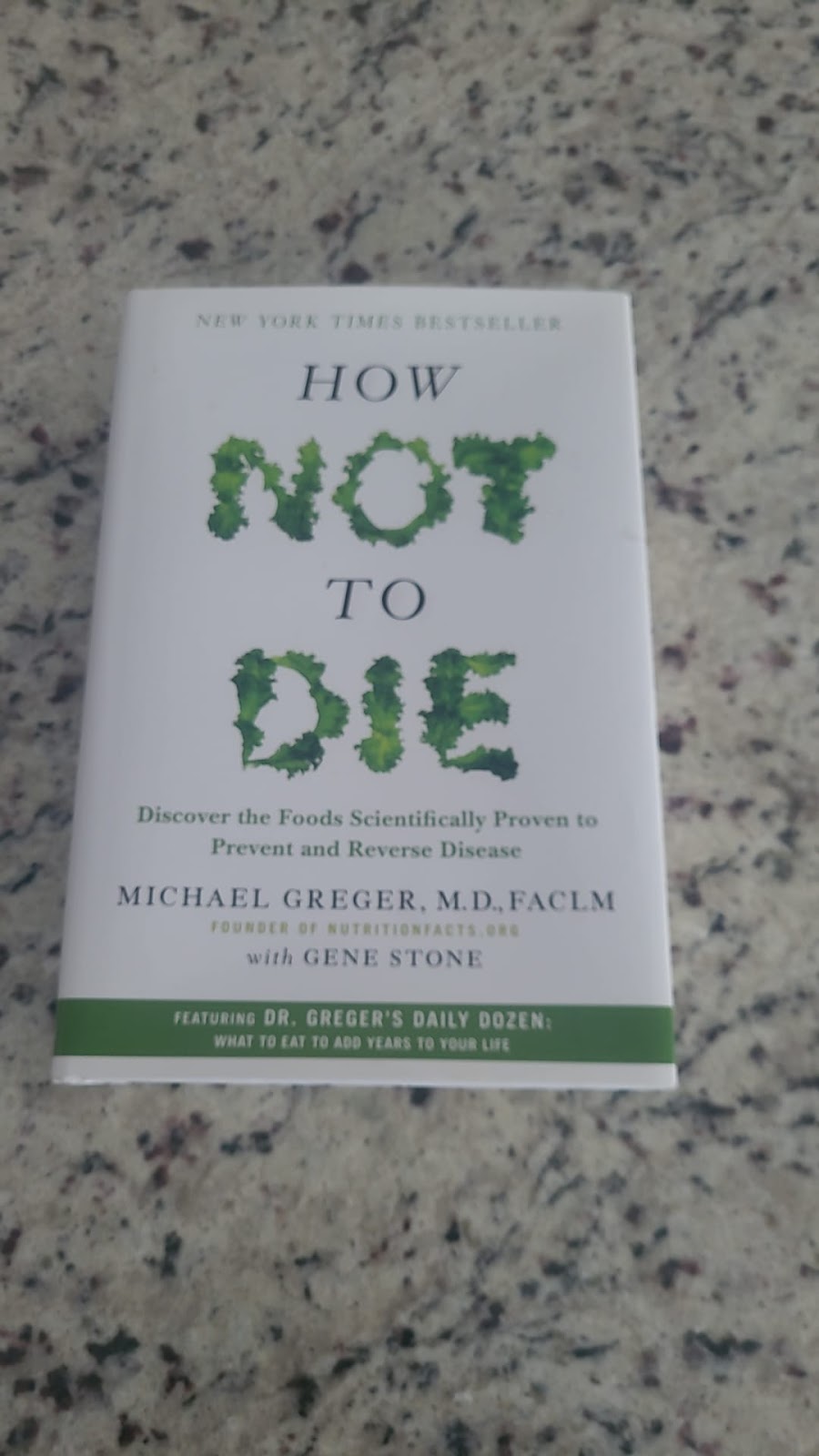
It has general information about what to do if you have cancer, and a specific chapter on each of the more popular cancers. In the prostate cancer chapter, it talks about Insulin-like Growth Factor 1 (IGH1), which helps all cells including cancer cells to grow. It suggests that unless you are an infant or an adolescent, you don’t want this stuff in your body. All animal products have IGH1, so I became vegan after reading this. No meat of any kind, no eggs, and no milk or milk products. I am instead eating nuts, beans, and tofu for proteins. According to my research, nuts and beans have to be combined, and tofu is a complete protein that is enough by itself. My previous doctor who said, “Eat Fresh Foods.” made all my food choices from fresh produce. Nothing processed, and no eating out at all at first. After a while, when two PSA tests dropped me from 6.4 to 3.3 in 7 months, I started to allow myself some dairy, and I would order mushroom pizza with cheese on it from a restaurant that made their own dough from flour and the tomato sauce from tomatoes each day.
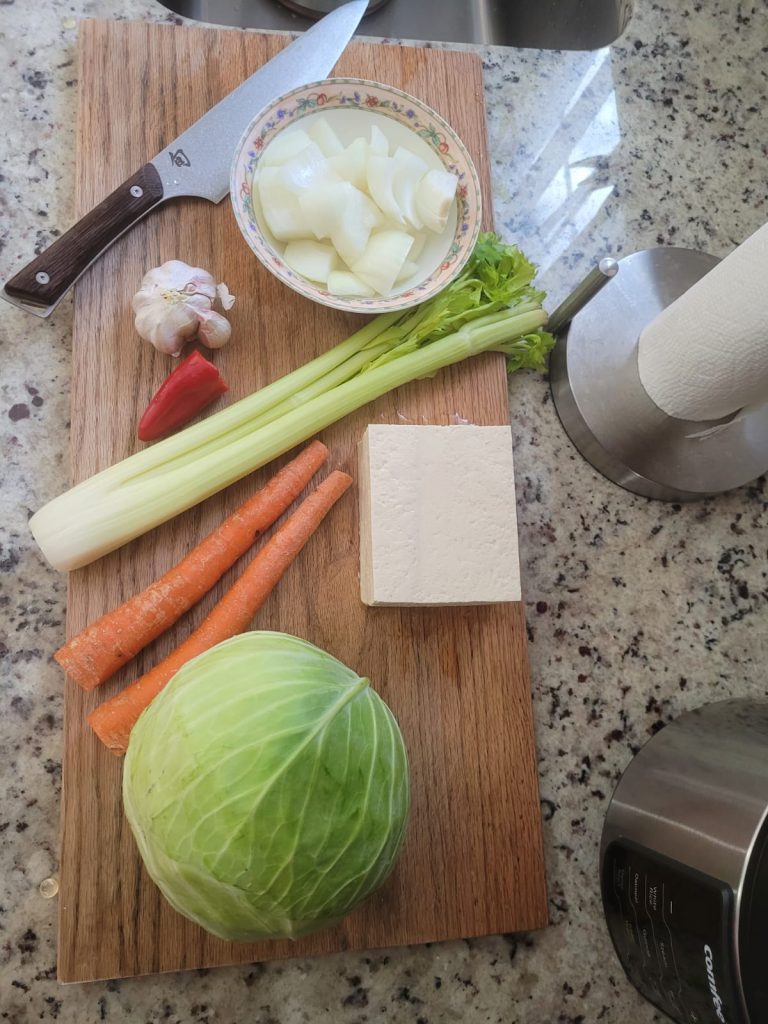
I threw out my plastic containers for water and wet foods. I have some stainless steel cookware without nickel that I bought a while back (mine are now currently unavailable, but here is a set from the same maker which are also nickel free.), and I purchased a stainless steel wok (awesome vegetable soup inside which I add chili pepper. . . see the strategy on capsaicin)

and a glass wok top. The 16 inch stainless steel Wok has a welded handle. The top is 15 inches, which fits very comfortably on side the Wok, covering most of it.

These are beautifully impressive as they are functional.
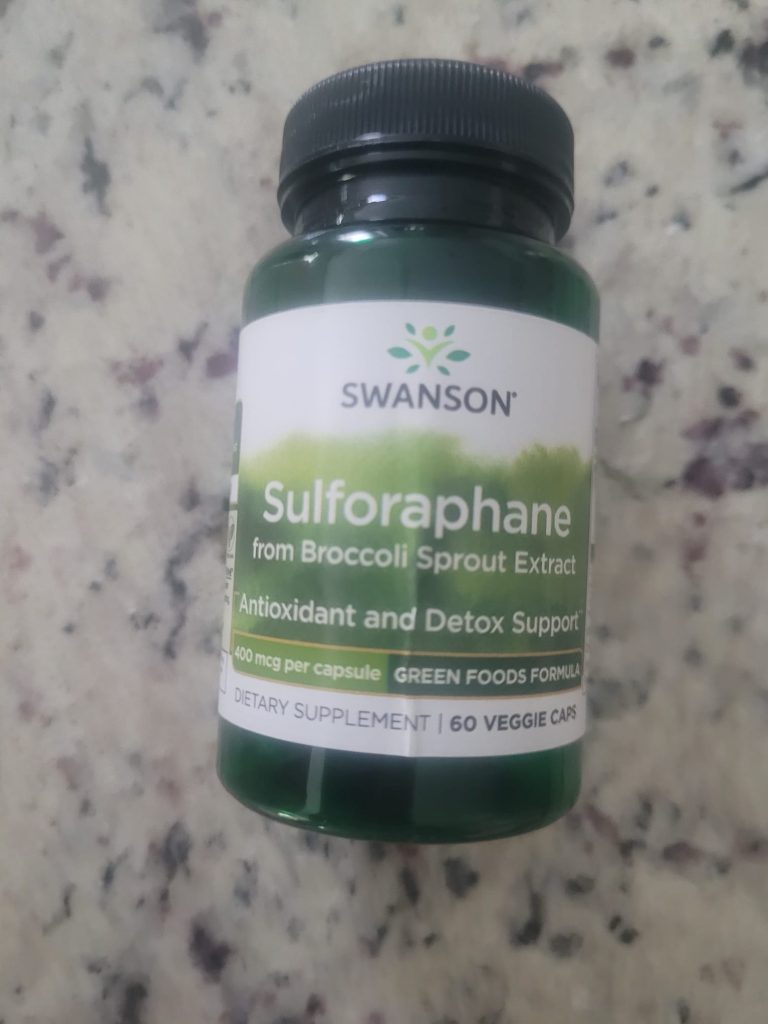
Broccoli is the super vegetable and tomatoes have lycopene. Luckily, I’ve always liked broccoli and tomato sauce. This became my eating staple for the first two months. I make my own sauce from Roma tomatoes, garlic, oregano, thyme, and basil. I buy fresh tomatoes and fresh broccoli from either the local Stop & Shop or an Aldi on the way between my two teaching jobs. I eat the broccoli tops raw, dipping them into the tomato sauce. If I want to cook the broccoli, I read in this research that I must cut it up and smash it around some, then wait 45 minutes for a chemical reaction to take place so that the nutrients remain in the broccoli. The apparently most important part of the broccoli is Sulforaphane. And here is the supplement I take to get the concentration in the blood higher than just eating broccoli alone.
In addition to broccoli and tomatoes, I found a study that had one group of participants drink pomegranate juice for a period of time, and another group of participants (the control group) do nothing. They found that the ones who drank the juice had their PSA doubling times extend significantly, meaning they slowed their PSA growth significantly. So I decided to start drinking it. For me, it had to be in glass bottles and to be as unrefined as possible. Here is what I chose: Pomegranaze, a pomegranate juice in a glass bottle.
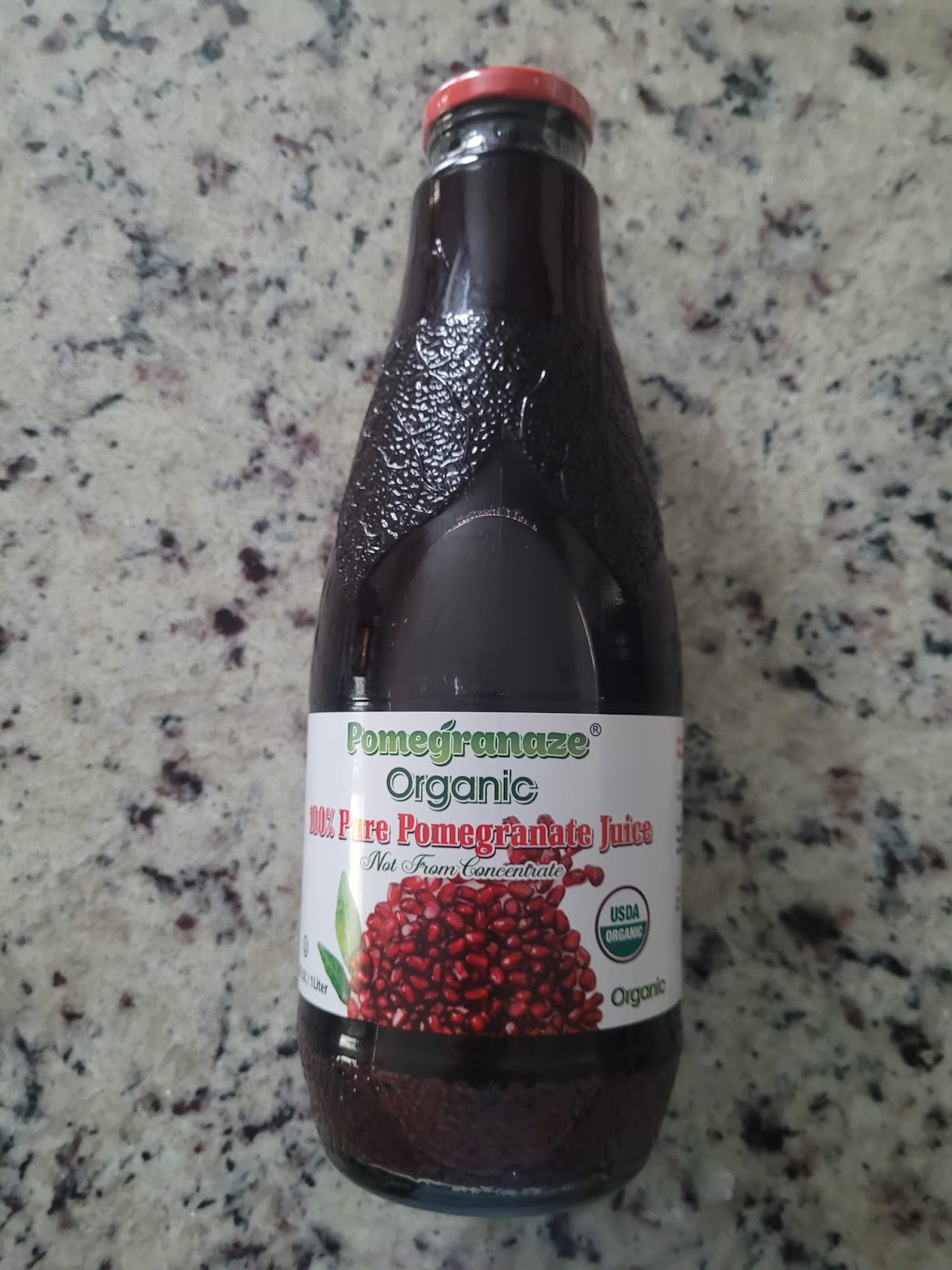
It looks like I have been drinking 6 ounces a day. I did the math for the first year: 68 bottles at 33.8 oz over 365 days. For me, it’s expensive at $9 a bottle.
Water
For years, I have read and heard that most drinking water is loaded with impurities, and any liquids stored in plastics becomes a complete no-no for me. PFAs and other new chemicals discovered in water almost on a weekly basis lead me to my first purchase, a water distiller and some glass pitchers. I will drink and cook only with distilled water created in a glass and metal distiller and stored in glass pitchers. I eventually ended up with six of the Glass Pitchers, and the distiller was one of the more expensive ones around $300, but it’s holding up well and works well. This decision was not the result of any specific information about distilled water and its effect on prostate cancer, but I did it anyway. It feels clean. Microplastics are still largely being studied, but we do know they’re not good for anyone.
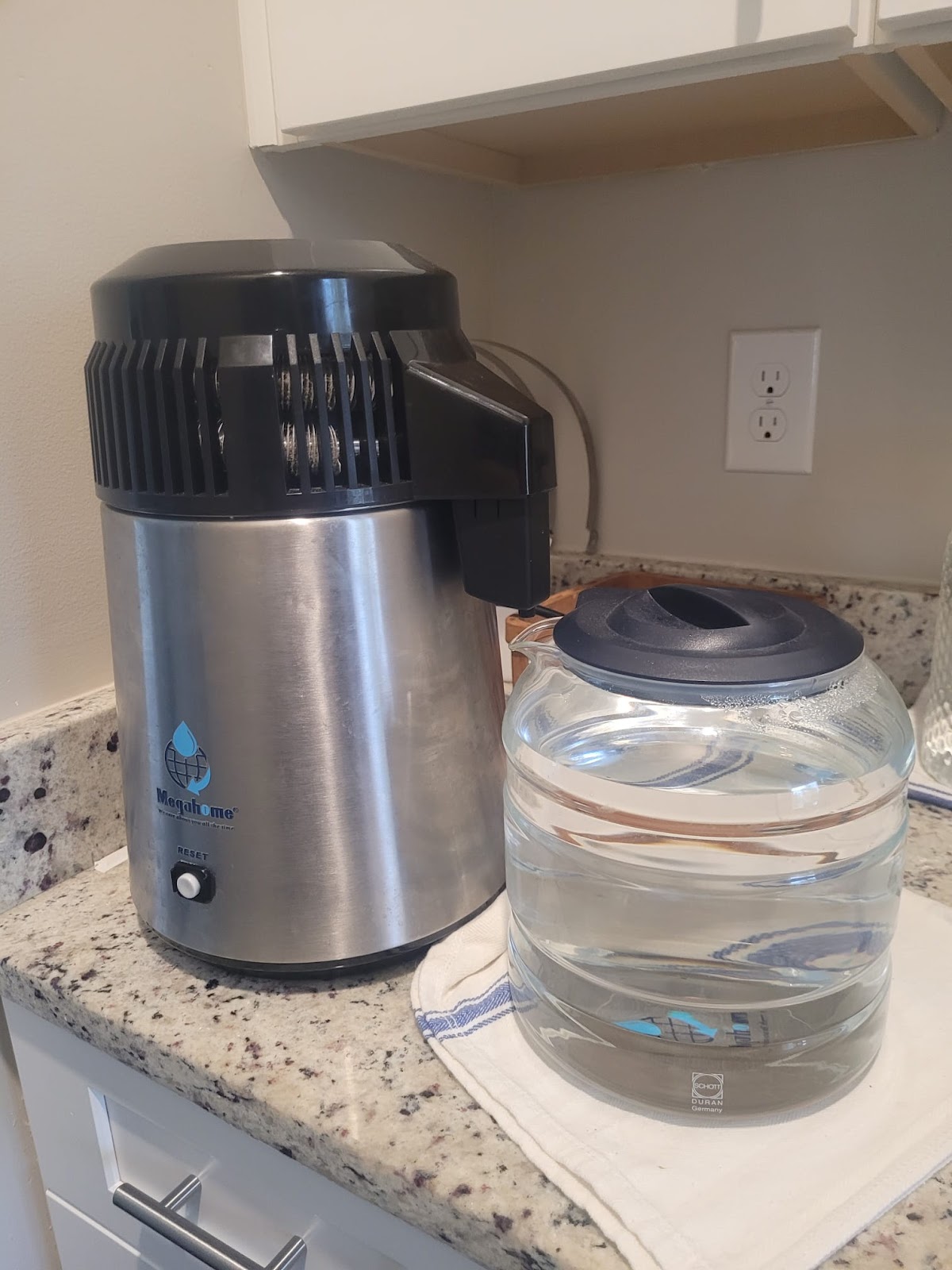
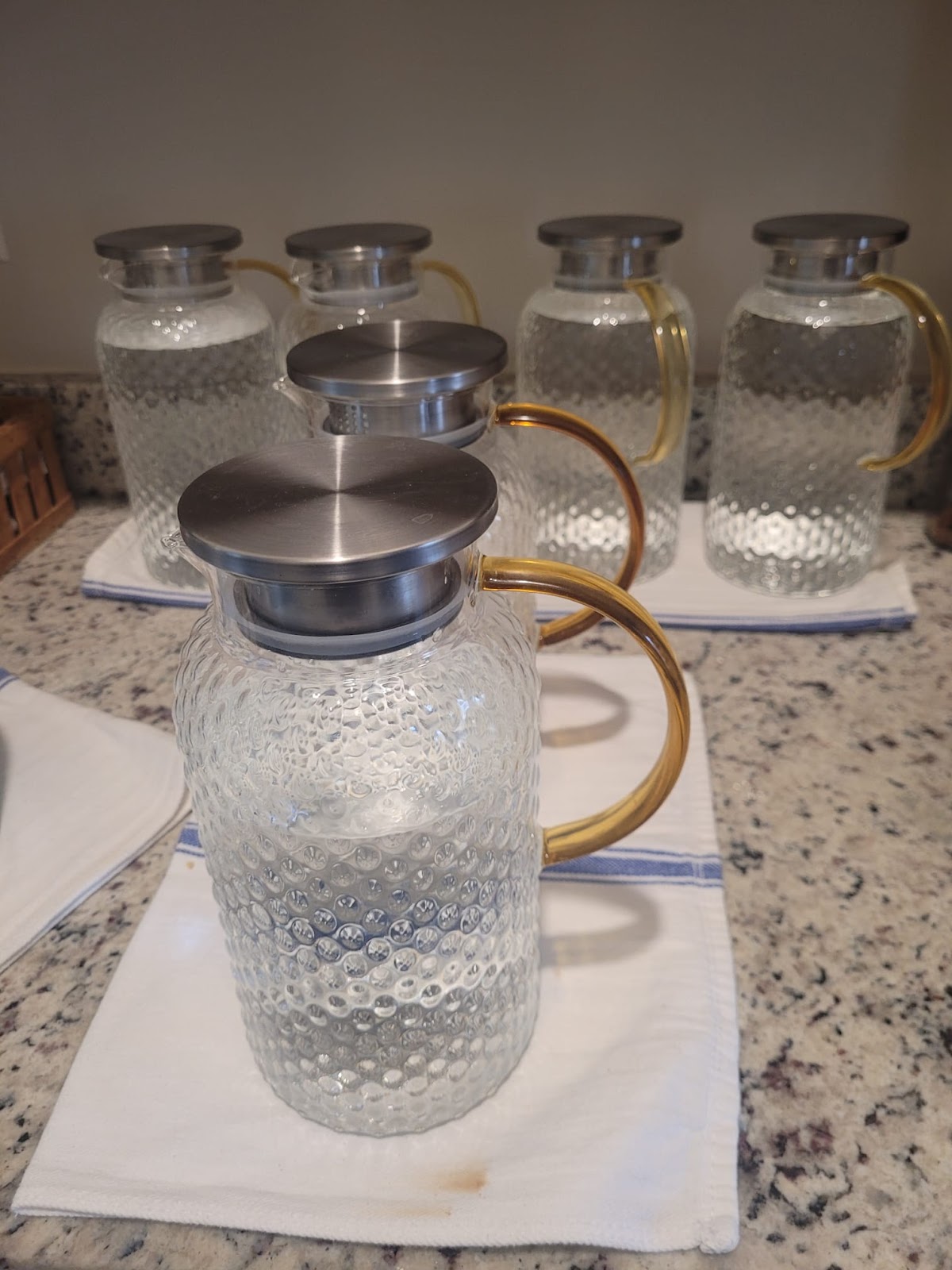
This Megahome Distiller has worked flawlessly for the last year, and I make a gallon or two a day as needed. I store a completed gallon in two of the six half gallon glass pitchers, so I try to have between three and four gallons available for use at any time. I used the handle for a while, but as soon as I took the distiller with me on a vacation, I removed the handle. Without the handle, the glass container fits inside the distiller itself, and then the entire distiller fits in a small luggage carryon. When I returned from the trip, I just left the handle off. The run time is about 5 to 6 hours, but after 4 to 5, I unplug it and let it cool. This gets most of the water out, but leaves way less debris in the container. I use a small sponge with the plastic scraper side on it to clean out whatever comes off after a light scrubbing. I then rinse a couple of times, and refill it for the next batch. I clean it every 10 or so gallons, much less than when I let it run to completion and did not scrub. At 50 gallons a month, I’ve made 600 gallons of very clean water in the last year, which tastes great and has way less potentially-cancer-causing microplastics and other garbage in it.
I bought two different water meters (A or B ) to measure Total Dissolved Solids (TDS):
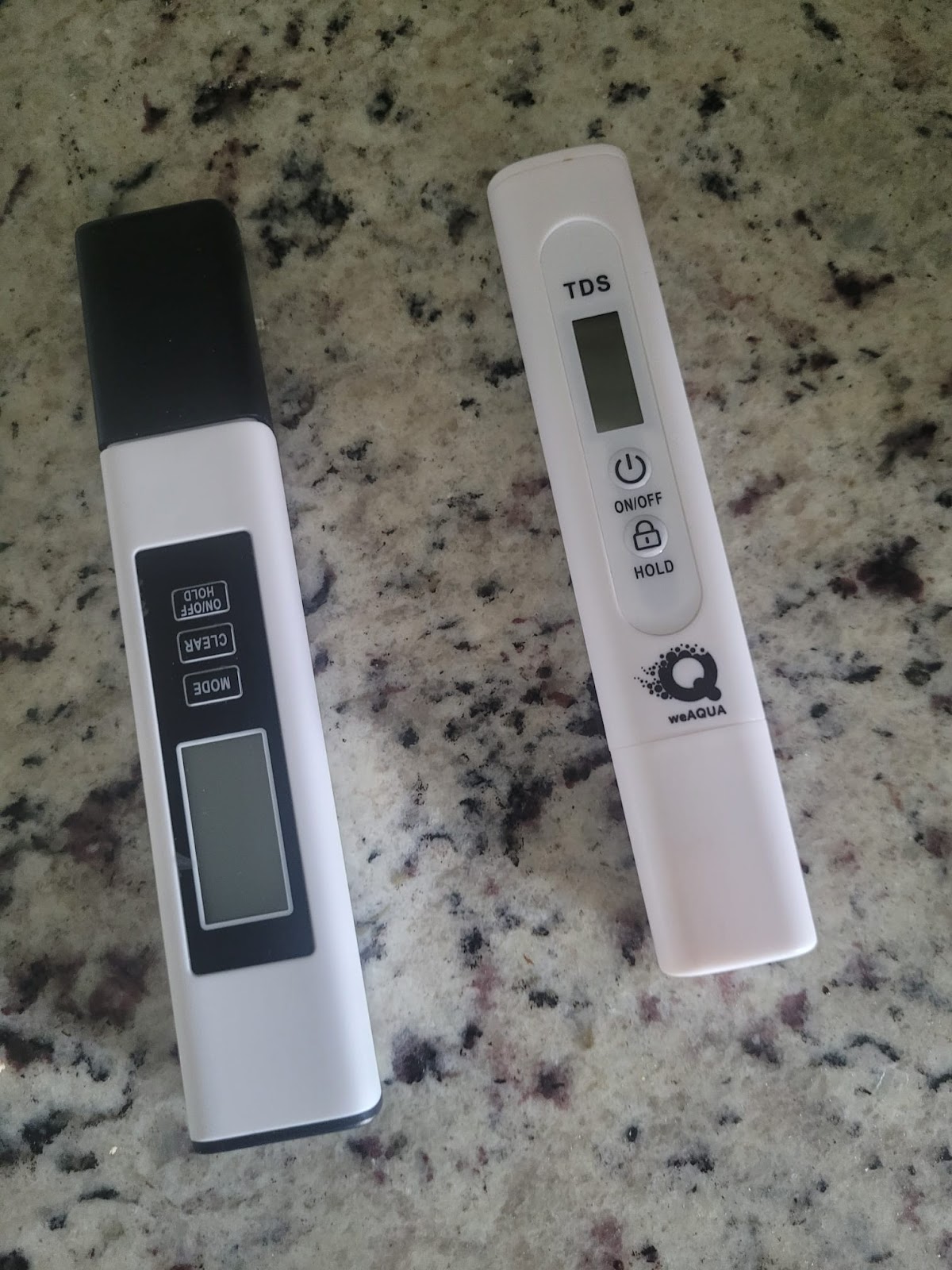
This way, I can measure some performance aspects of my distiller. My tap water measured 120, and the distilled water measured 0 or 1. Interestingly enough, I took some of my distilled water and put it into an empty plastic water bottle, the kind you get at the store 24 or 48 at a time. The next morning, that water read 60. So I don’t store any liquid or moist food items in anything plastic. These impurities cause DNA mutations, and that is what cancer is: your normal cells with too many DNA mutations that are subtle enough that your immune system cannot tell they are rogue cells.
Reverse Osmosis
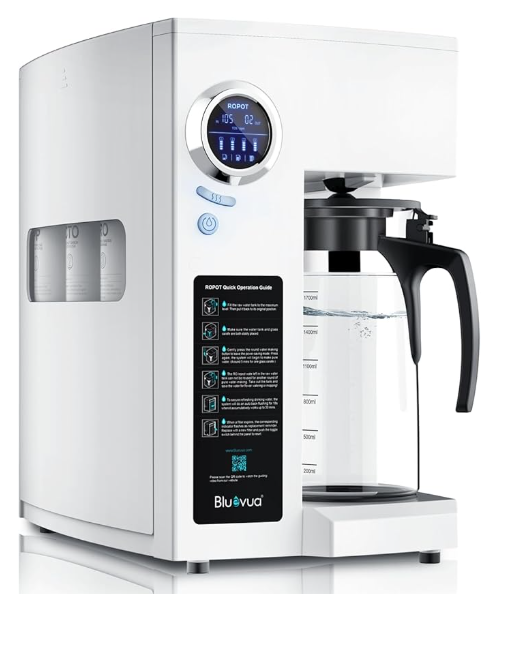
I have since learned that some chemicals are not removed by distillation alone. This is because the vaporizing point of some undesirable substances sits below the boiling point of water and therefore do end up in distilled water. A more complete water cleansing solution requires that I pass the water through a reverse osmosis (RO) process first, then distill it. One RO machine that has been researched by a family member is the Bluevua RO100ROPOT Reverse Osmosis System Countertop, and I now use this one.
Air
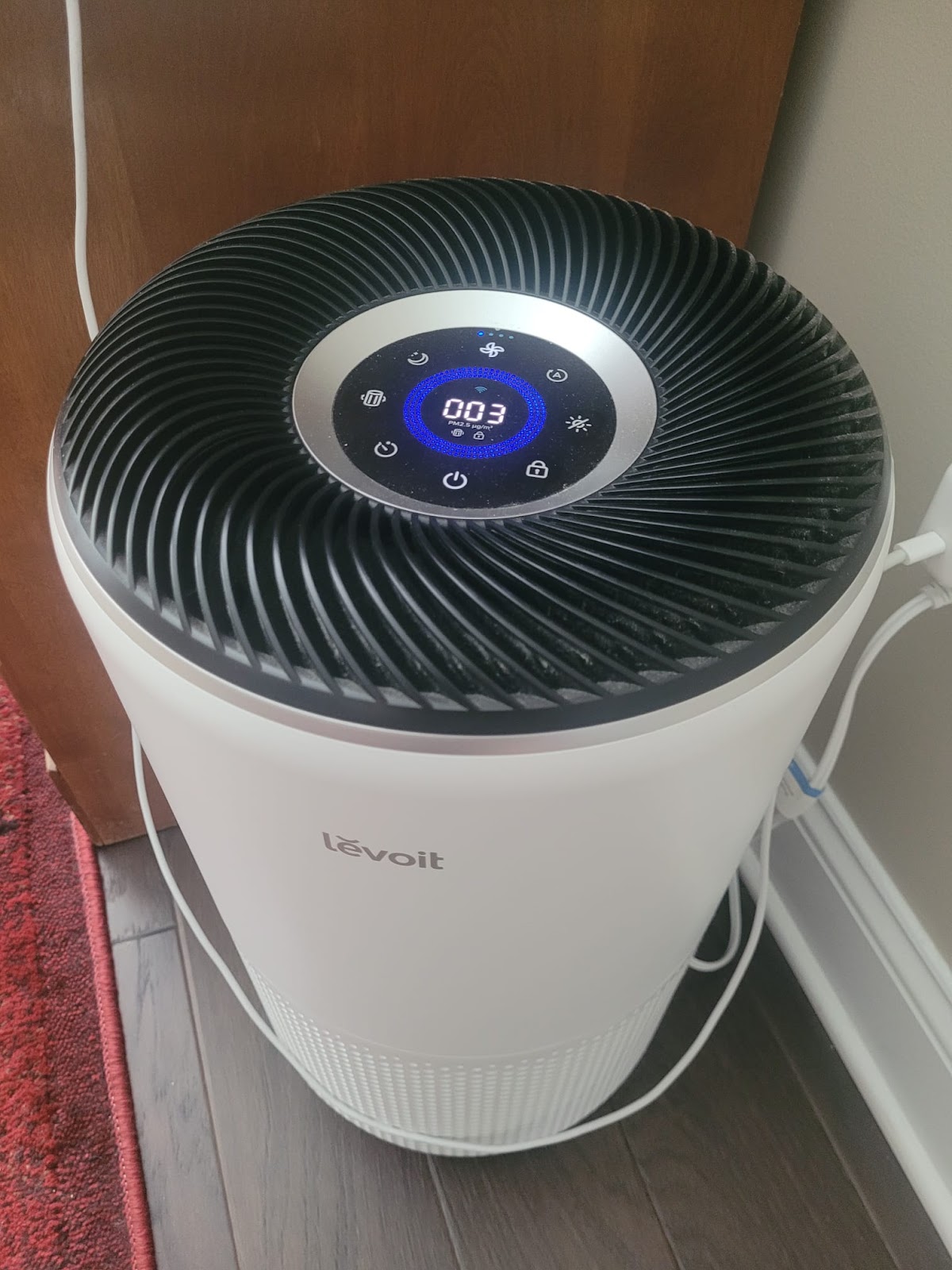
The next buy was a filter change for my air filter. The fewer the impurities the better. Here is the unit I bought it for. Some family members who visit from time to time have allergies, and so I bought a second one for when they visit. The air smells so clean.
Costs for the Clean Water / Air / Food Strategy
The initial expenses were $200 for the Air Cleaner, $300 for the Water Distiller, $20 Water testers, $100 for glass pitchers, and $100 for stainless and glass cookware. So, $720 initial outlay and $50 annual reoccurring for a replacement air filter and citric acid cleaner for the distiller. So year 1 this was $2 a day with only pennies a day of recurring costs. Going Vegan saves at least $50 a month not buying meat/cheese/eggs. So that is $600 a year savings. Not eating out as much also saves me at least $100 a month (I didn’t do much of that anyway). I do spend a lot more time making food for myself, but since I bought the wok, I can make food for 3 days with each cooking effort, and it takes 10 minutes a day to attend to the water distiller.
Twice a week cooking takes and hour each, and 10 minutes 6 times a week to distill water, so time spent is about 3 hours a week. I used to cook at home periodically, and drive out to get delivery or eat out, so I should subtract that time so see how much extra time this is taking me. It seems like a wash.
Closing Thoughts
In summary:
- Food – Went Vegan – Drank Pomegranate Juice – Ate a lot of Broccoli and Tomatoes
- Avoided Plastics
- Filtered my Air
- Distilled my Water
- Initial Cost was $720 but made that back with the Vegan lifestyle in one year.
- Timewise, it seems to take no extra time to implement all of these strategies.
This strategy is a win/win. It feels great to have clean air/water/food. Going vegan paid for it all in the first year, and will save money going forward. Eat/Drink Fresh for the win !


Leave a Reply to Patrick Murray Cancel reply